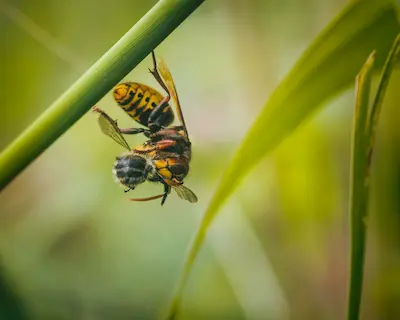
Most people think of wasps and bees as separate problems. They often aren't. Several wasp species — including yellow jackets and hornets — actively hunt honeybees and raid their hives. If you have both on your property, the wasps may be there precisely because the bees are.
How wasps target bees
A foraging wasp will intercept a bee mid-flight, sting it, and carry it back to the nest as protein for the larvae. This happens individually throughout the season, but the more serious threat is raiding. A wasp scout that locates a beehive will recruit the rest of the colony, and a coordinated raid can overwhelm a hive's defences entirely — stealing honey, pollen, and larvae in the process.
Honeybees do have one remarkable defence: they can surround an intruder wasp and vibrate their flight muscles to generate heat, effectively cooking the wasp alive. But this only works against small numbers. A large wasp colony attacking at scale can wipe out a honeybee colony within hours.
When it gets worst
Late summer and autumn are the most dangerous period. Wasp colonies reach their peak size — sometimes tens of thousands of individuals — just as their natural food sources start to run low. Fruit drops, insect populations thin out, and wasps become more aggressive and more opportunistic. A nearby beehive, full of honey and brood, becomes a very attractive target.
What this means for your property
If you are seeing heavy wasp activity near a known bee colony, it is worth getting both assessed at the same time. Removing the wasp nest reduces the pressure on the bees, and relocating the bees removes the attractant for future wasp activity. Charles can assess the full picture on-site and advise on the right order of operations.